
Navigating the Custom Home Building Journey from Planning to Final Inspection
Building a custom home offers the chance to create a living space tailored exactly to your needs and style. Yet, the process can feel overwhelming without a clear understanding of the steps involved. Knowing what to expect from the initial planning stage to the final inspection helps you stay organized, avoid surprises, and make confident decisions. This guide breaks down the custom home building journey into manageable phases, providing practical insights for anyone ready to build their dream home.
Planning Your Custom Home
The journey begins with thorough planning. This phase sets the foundation for the entire project and involves several key steps:
Define your needs and budget
Start by listing your must-haves, such as the number of bedrooms, style preferences, and special features like a home office or energy-efficient systems. Establish a realistic budget that includes construction costs, permits, design fees, and a contingency fund for unexpected expenses.
Choose a location
The site affects design possibilities, costs, and lifestyle. Consider factors like proximity to work, schools, and amenities, as well as the land’s topography and zoning restrictions.
Hire professionals
Engage an architect or home designer to translate your ideas into detailed plans. ROK Development can help guide you through the process and manage construction.
Obtain necessary permits
Your builder or architect usually handles permits, but understanding local building codes and regulations helps you avoid delays.
Designing Your Home
Design is where your vision takes shape. Collaborate closely with your architect or designer at ROK Development to create plans that reflect your lifestyle and preferences.
Create floor plans and elevations
These drawings show the layout, room sizes, and exterior appearance. Review them carefully to ensure they meet your needs.
Select materials and finishes
Choose flooring, cabinetry, countertops, and fixtures early to avoid delays later. Consider durability, maintenance, and style.
Plan for energy efficiency and sustainability
Incorporate features like proper insulation, energy-efficient windows, and solar panels to reduce long-term costs and environmental impact.
Preparing the Site and Foundation
Once designs are finalized and permits approved, construction begins with site preparation.
Clear and grade the land
Trees, rocks, and debris are removed, and the ground is leveled to create a stable base.
Lay the foundation
Depending on your home design and soil conditions, this could be a slab, crawl space, or basement foundation. Proper foundation work is critical for structural integrity.
Install underground utilities
Water, sewer, and electrical lines are placed before framing starts.
Building the Structure
This phase transforms plans into a physical home.
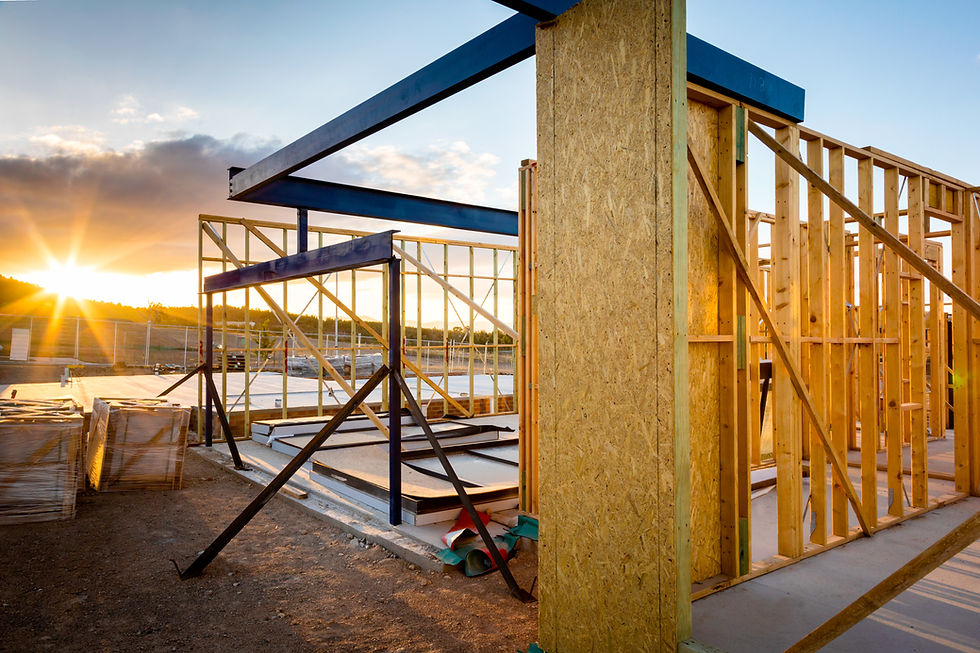
Framing
Carpenters build the skeleton of the house, including walls, floors, and roof structure.
Install windows and doors
These are added to enclose the structure and protect it from weather.
Rough-in systems
Electricians, plumbers, and HVAC technicians install wiring, pipes, and ductwork inside walls and ceilings.
Insulation and drywall
Insulation improves energy efficiency, and drywall creates interior walls.
Interior and Exterior Finishes
With the structure in place, focus shifts to finishes that define your home’s character.
Flooring and cabinetry
Install hardwood, tile, or carpet and fit kitchen and bathroom cabinets.
Painting and trim
Walls get painted, and baseboards, crown molding, and other trim details are added.
Fixtures and appliances
Lighting, faucets, and appliances are installed and connected.
Exterior work
Siding, roofing, driveways, landscaping, and decks complete the outside.
Final Inspection and Move-In
Before moving in, your home must pass inspections to ensure it meets safety and building standards.
Schedule inspections
Local authorities check electrical, plumbing, structural elements, and overall code compliance.
Address any issues
Builders fix any problems identified during inspections.
Obtain a certificate of occupancy
This document confirms your home is safe and ready to live in.
Final walkthrough
Review the home with your builder to note any last touch-ups or corrections.
Tips for a Smooth Custom Home Building Experience
Communicate regularly
Stay in touch with your builder and design team to track progress and address concerns quickly.
Keep detailed records
Save contracts, plans, receipts, and correspondence.
Be flexible but firm
Some changes may be necessary, but avoid frequent design shifts that increase costs and delays.
Plan for contingencies
Construction often encounters unexpected challenges. A financial buffer helps manage surprises.
Schedule your free consultation: ROK Development


Comments